The Seevetal-Ramelsloh junction and the Horster interchange
A7
Velbert, Germany / 05.2024
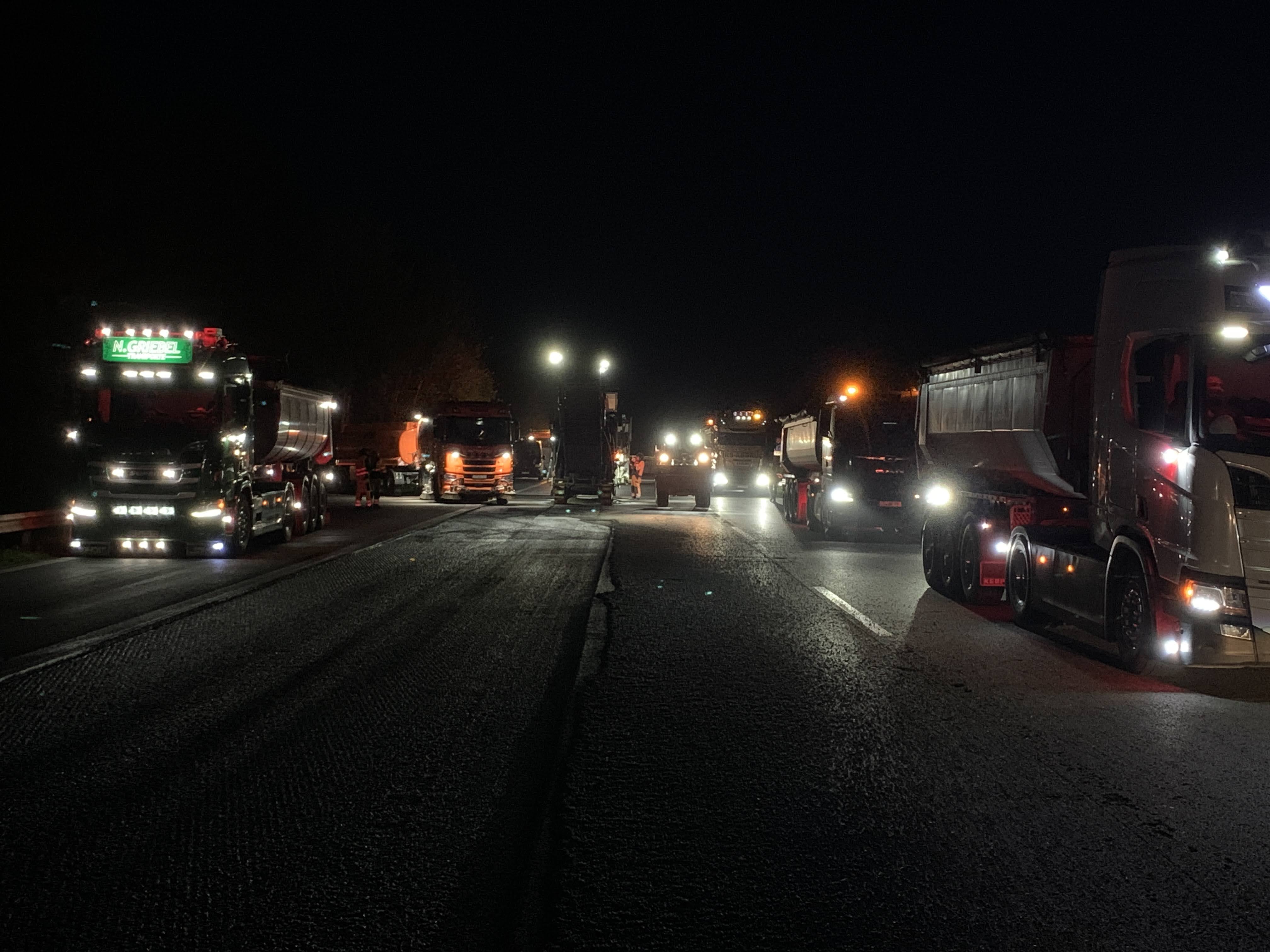
The A7 motorway is one of Germany’s most important north-south links. Between the Seevetal-Ramelsloh junction and the Horster Dreieck, the road surface in the direction of Hamburg was resurfaced. On behalf of Die Autobahn GmbH des Bundes, Northern Branch, PORR transport route engineering carried out refurbishment work on a section of road approximately three kilometres long. The work took place whilst the A7 was fully closed between Friday evening and Monday morning.
Facts & Figures
Company
PORR Verkehrswegebau GmbH
Type
Highway
Runtime
05.2024
Road resurfacing on the A7 between Seevetal-Ramelsloh and the Horster Dreieck
Frequent cycles of frost and thaw had damaged the carriageway of the main lane and the first overtaking lane over a three-kilometre stretch to such an extent that the speed limit had to be reduced to 80. To minimise disruption to traffic on this heavily used stretch of road, all work – including the installation and removal of traffic control measures, dismantling and replacement of the asphalt layer, as well as the final road markings – had to be carried out over a single weekend in a 24-hour operation.
Work on a heavily used motorway section
Damage to the existing road surface made it necessary to resurface the asphalt. As part of the project, around 19,000 m² of open-graded asphalt (OPA) wearing course was renewed.
As only a limited closure period was available for the construction work, all tasks were carried out over a single weekend. These included the installation and removal of traffic safety measures, milling work, the laying of the new wearing course as well as road marking work.
Laying of a new OPA surface course
After the existing surface course had been milled off, the sub-base was cleaned using high-pressure washing. This was followed by the laying of a bituminous intermediate layer (Stress Absorbing Membrane Interlayer, SAMI) with an applied aggregate layer. The new surface course of open-porous asphalt was then laid on top of this base. The surfacing was carried out across the entire width of both lanes using a widened asphalt paver with an upstream feeder. Finally, the road markings were applied and the junctions with the existing carriageway surfaces were completed.
Digital support for construction processes
A digital project management system was used to plan and manage the works. Furthermore, the preparatory work involved organising personnel, equipment, asphalt deliveries and backup machinery for the duration of the project. In addition to PORR transport route engineering, other business units were involved in the asphalting works, including PORR mastic asphalt.
Road resurfacing during a weekend closure
The works on the A7 involved milling, asphalting and road marking on a heavily trafficked section of motorway. In addition to the laying of the new OPA surface course, the project was characterised in particular by the organisation of construction processes during the full closure as well as the coordination of the various trades.