Brunsbüttel
LNG-Terminal
Brunsbüttel, Germany / 09.2024 - 03.2026
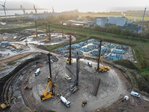
German LNG Terminal GmbH is pushing ahead with the construction of an onshore LNG terminal in Brunsbüttel, which will enable the import of liquefied natural gas from 2027, as well as hydrogen derivatives at a later date. A central component of the project is the construction of two LNG tanks. Under the direction of the general contractor CS Gas North (Cobra Sener), the umbrella consortium of PORR Spezialtiefbau (NL Oldenburg) and König GmbH, Stade, carried out the deep foundations.

Facts & Figures
Company
PORR Spezialtiefbau GmbH
Type
Foundations
Runtime
09.2024 - 03.2026
Foundations for the energy infrastructure
Before the future tank structures become visible, their foundations are laid deep within the subsoil. In total, more than 5,800 Fundex piles, with diameters of 44/56 cm and lengths of around 23 m, were installed. The piles transfer the loads from the future LNG tanks into the deeper, load-bearing soil layers and form the foundation for the subsequent structural and plant construction work.
Pile foundations in coastal soil
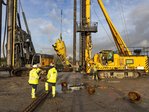
The work took place in the immediate vicinity of the River Elbe, under the geological conditions typical of the North German coastal landscape. Beneath the prepared working level lay layers of clay up to 19 m thick before load-bearing sand layers were reached. These ground conditions determined the requirements for the deep foundations. At times, up to eight drilling rigs were in operation simultaneously, working their way step by step through the various soil layers.
Thousands of piles for two Tank farms
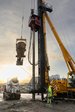
Fundex piles were used for the deep foundations. This method involves complete soil displacement and was employed for the foundations of the LNG tanks. Test loads were carried out before series production began. On this basis, more than 5,800 piles were subsequently manufactured, which today form the supporting structure beneath the future tank farms.
Work on a large-scale construction site
A closely co-ordinated construction schedule was established on the terminal site, encompassing delivery, reinforcement, concreting and drilling work. Every day, reinforcement cages were delivered, prepared and integrated into the ongoing work. At the same time, pile fabrication and further preparatory work for the subsequent construction phases were carried out.
Project-specific work and safety procedures applied to the construction site. These included separate routes for vehicles and pedestrians, additional personal protective equipment, as well as technical warning and information systems on the construction site. Furthermore, there were specific requirements for work involving potential ignition sources. Electro-hydraulic cutting methods were used to process the reinforcement cages. The work procedures were adapted to the requirements of the terminal site and the intended operating conditions.
Laying the foundations for the next construction phases
The completion of the deep foundations created the conditions necessary for the subsequent work on the LNG tanks. This paved the way for a key construction phase in the further development of the Brunsbüttel site. Even before the future structures came to define the terminal’s appearance, the foundations for one of the plant’s central areas were being laid beneath the surface.