Berlin
Schöneweide Combined Heat and Power Plant
Berlin, Germany / 04.2021 - 09.2021
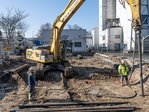
On the site of the Schöneweide combined heat and power station in south-east Berlin, BTB Blockheizkraftwerks-, Träger- und Betreibergesellschaft mbH constructed a new machine house. The building houses the plant equipment as well as the transformer station for two large-scale river-water heat pumps. PORR special civil engineering’s Berlin branch carried out the foundation work for the new building.

Facts & Figures
Company
PORR Spezialtiefbau GmbH
Type
Foundations
Runtime
04.2021 - 09.2021
Pile foundations for the new machine house at the Schöneweide combined heat and power station
Part of an expansion of the district heating infrastructure
The new plant building forms part of a project to expand the district heating network in Berlin-Schöneweide. The plant is designed for a flow temperature of up to 90 °C and is expected to provide a thermal output of around 7 MW. In future, the water pumping station, as well as four CHP gas engines and a power-to-heat plant, will complement the existing fleet of plants at the site. According to the operator, the expansion serves to extend the district heating supply in south-east Berlin and is designed to supply around 100,000 households. The plant is intended to operate primarily during the warmer months between spring and autumn, when temperature conditions in the River Spree allow for operation.
HLV piles for the machine house foundations
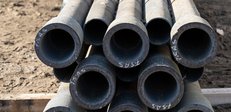
A total of 62 high-performance Displacement piles (HLV piles) from the Stump system, with a diameter of 170 mm and pile lengths of up to 10 m, were used for the foundations of the new building. The precast driven piles, made from ductile cast iron pipes, are joined to the required length using cast iron sleeves, then driven into the subsoil and grouted with cement mortar. The chosen foundation system was tailored to the subsoil conditions and the requirements of the structure.
Foundation on loosely compacted sands
The subsoil at the project site consisted predominantly of loosely compacted sands. There were some areas with contaminated soil. The displacement pile method used does not involve the removal of the existing soil during pile fabrication. Consequently, no additional soil is excavated during the pile fabrication process. At the same time, the displacement of the soil leads to the compaction of the subsoil. A total of 62 HLV piles formed the foundation for the load-bearing capacity of the new machine hall.
Foundation for the site’s technical installations
By constructing the pile foundation, PORR special civil engineering created the conditions necessary for the construction of the machine hall on the site of the Schöneweide combined heat and power plant. The foundation was tailored to the site’s geotechnical conditions as well as the structural requirements of the building, and forms the basis for accommodating the planned technical installations.