Construction practice
In cycle planning, the construction project is broken down into work units – known as cycle areas – using the Last Planner® System. At the same time, the work steps carried out by the various trades involved are grouped into trade teams. Cycle planning defines the chronological sequence of the work steps as well as the personnel capacities allocated to them. To this end, a detailed project implementation plan with interim targets is drawn up, which speeds up the project process.
Reliably achieving the goal by involving all project stakeholders.
The trade teams progress through the construction project on the basis of defined cycles. Cycle planning and cycle control serve to structure and coordinate work processes during project execution. With the help of simulations, potential bottlenecks and coordination requirements can be identified at an early stage and taken into account in further planning. Working as a team, the project stakeholders progress from the work preparation of the overall process to day-by-day control.
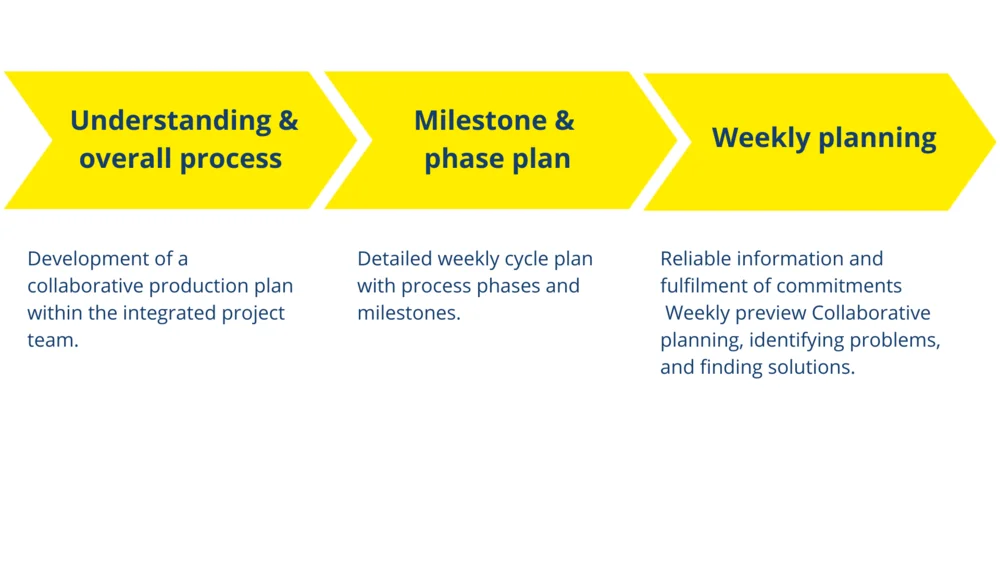
crotch model
© PORR
Customer benefits Last Planner®.
- Increased planning security thanks to the reliable and effective coordination of all trades
- Time and cost savings thanks to fine-cyclical control of the daily construction process
- Reliable execution thanks to openness, transparency and trust within the entire construction team
In phased planning, the construction project is divided into work units known as “phases.” At the same time, the work steps performed by the trades operating within each phase are grouped into “trade teams.” Through phased planning, we define how long each individual production step takes and what work needs to be completed during that time, along with the required staffing levels.
Each trade team moves through the construction project at a defined cycle with a uniform speed and direction. Through cycle planning and cycle control, we accelerate and optimize the workflow during the execution of our construction projects. Potential bottlenecks in the workflow are identified early on through simulations and eliminated.
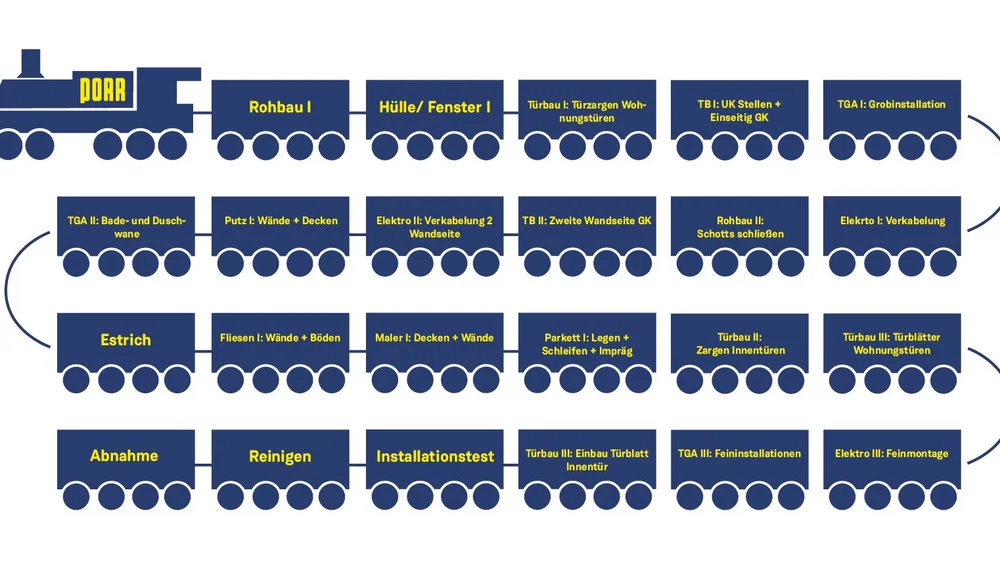
Der Takt ist das zentrale Element.
© PORR
Customer benefits Cycle planning.
- Opportunities for cost reduction through transparency across the entire process, as well as the prevention of disruptions and waste during the project.
- Support for on-time project delivery through the phased completion of individual construction stages.
- Support for the project’s quality objectives through the early identification of potential sources of errors and problems.


