Soil mixing method
The soil mixing method is a process for deep soil stabilisation, in which the existing soil is mixed with a binder suspension. It is used to stabilise excavation pits, provide a barrier against groundwater as well as for subsoil improvement. The selection and implementation of the method are carried out taking into account the relevant technical, economic and project-specific requirements.
Glossary: Soil mixing methods
Soil mixing methodDeep soil stabilisation in accordance with DIN EN 14 679
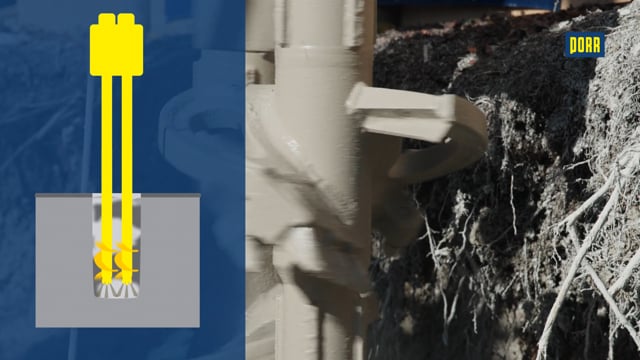
The soil mixing method involves mixing the existing soil with a binder slurry. This specifically alters the mechanical and physical properties of the soil. The resulting columns overlap to create a continuous soil mixing wall that can be used for cut-off walls or temporary construction pit systems.
HEB beams can be inserted into the new panels to create low-deformation shoring walls. They can also be anchored using double U-beams.
The soil mixing walls bond with surrounding soil layers with low water permeability or with artificially produced sealing slabs to seal off the bottom of the construction pit against rising groundwater.
Areas of application include:
- Construction pit shoring in conjunction with embedded load-bearing elements
- Transverse bulkheads to divide large construction pits
- Slope and embankment stabilisation
- Dam sealing
- Landfill enclosures
- Enclosure of contaminated areas on industrial brownfield sites and similar locations
- Subsoil improvement for various load and usage requirements

Technical brochureSoil mixing method

Benefits / Featuresof the soil mixing methode
- Sealing function: Construction of continuous soil-mixed walls for sealing and shoring structures.
- Construction: Can be carried out using fixed load-bearing elements and project-specific rear anchoring.
- Materials used: Use of in-situ soil in combination with a binder suspension.
- Soil management: Depending on the project, minimal soil extraction and reduced soil disturbance.
- Scope of application: Adaptation to different subsoil conditions and project requirements.
- Construction process: Construction speed depends on project and subsoil conditions.
- Surface finish: Smooth wall surfaces as a basis for subsequent construction processes.
- Execution: Low-noise and low-vibration construction.
- Site set-up: Comparatively small space requirement for construction.
Basic factsof the soil mixing methode
Design variants Soil mixing methode
Soil mixing is available in the following design variants:
- Soil mixing wall as a cut-off wall
- Soil mixing wall with load-bearing elements as a temporary construction pit system
- Individual soil mixing columns for subsoil improvement
Quality assurancesoil mixing method
We ensure a high standard of workmanship through:
- Individually coordinated procedural instructions
- Compliance with the requirements of the DIN EN 14 679 standard
- A production report is drawn up for each pair of columns
- Clear processes via our quality management system in accordance with DIN EN 9001:2015


